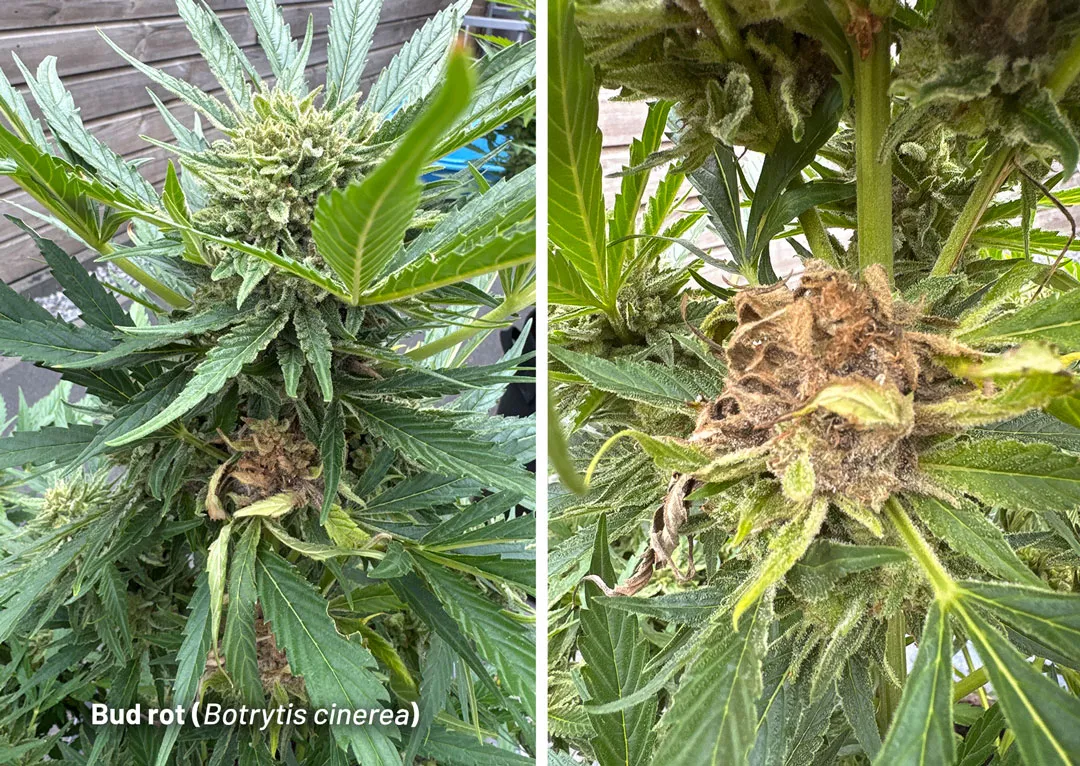
Cannabis bud rot, also known as grey mold or Botrytis cinerea, is a fungal disease that can devastate cannabis crops by reducing prized blooms to a slimy mess. Bud rot can also damage many traditional fruit and veg crops too.
With experience dating back to the 1980’s this Dutch Passion guide features the best practical, expert-backed advice to allow you to identify and treat cannabis bud rot/grey mould. Perhaps more importantly the info will allow you to prevent bud rot in future grows.
Bud rot can strike whether you are growing feminised seeds or autoflower seeds. It can affect indoor, outdoor and greenhouse grows with ruined crops if left untreated. This guide offers the simplest and most effective tips, reference pictures and answers to the most common questions.
What are the main causes of cannabis bud rot?
Cannabis bud rot is primarily caused by the fungus Botrytis cinerea. This thrives in specific cool/damp grow conditions, indoors or outdoors.
The main causes include:
High Humidity: High moisture levels, above 60% RH (relative humidity), creates optimised conditions for fungal spores.
Poor Air Circulation: Dense canopies or tightly packed buds trap moisture, encouraging fungal growth in pockets of uncirculated stale air.
Temperature Fluctuations: Cool, damp conditions (below 68°F/20°C) combined with high humidity promote Botrytis spread.
Physical Damage: Wounds from pruning, untidy defoliation, pests, or rough handling can allow fungal spores to enter.
Overwatering: Saturated soil or frequent watering ensures the high humidity conditions adored by fungal spores.
Contaminated Equipment: Dirty tools or hands can introduce spores to healthy plants. Sterilise your tools, scissors etc with a thorough wipe of alcohol. Ensure clean hands and if necessary clean clothes for maximum safety.
Poor grow room hygiene: Old leaves, foliage etc left in e.g. a bag in the grow room are an ideal breeding ground for fungus. Always keep your grow room as clean as you can. remove waste immediately. Clean & disinfect pots and tent surfaces thoroughly between grows with e.g. a dilute (~3%) hydrogen peroxide solution.
How to identify cannabis bud rot
Early detection is critical to managing cannabis bud rot. Here are the main symptoms to look for. from early stages to advanced:
Early Stage cannabis bud rot: Small, discoloured spots (grey, white, or brown) on buds or leaves. Buds may feel a little bit soft or mushy. A musty, wet-sock or mildew-like smell may be noticeable. Often you see wilting leaves hanging on outside of the bud, a tell-tale sign that there could be rot present in the flower itself.
Mid-Stage cannabis bud rot: Greyish-white, fuzzy mould can appear inside the buds. This mid-stage bud rot can be hidden inside dense blooms and may be hard to spot without regular plant monitoring. Affected areas turn brown or black and may eventually turn crumbly. Leaves near the bud rot often look yellow, unhealthy and wilt.
Advanced Stage cannabis bud rot: If bud rot/grey mould has been allowed to reach an advanced stage then depressingly large chunks of buds turn can turn dark brown/black with a slimy rotten texture. The mould can spread rapidly; entire blooms can collapse or rot away. A strong, unpleasant odour is evident. At this stage serious damage is already done and the entire crop may be only days away from disaster.
Pro tip: Always be on the look-out for wilting leaves or small brown/white irregularities. Regularly inspect dense blooms by gently pulling them apart to check for hidden mold.
Cannabis bud rot pictures
How to cure cannabis bud rot
If you see, or suspect, bud rot act quickly to save your crop:
Isolate Affected Plants: Remove infected plants away from healthy ones to prevent fungus spores spreading from infected plants to healthy ones.
Surgical Removal: Using sterilised scissors (thorough wipe with alcohol), cut out affected bud sections, removing at least 2cm/1 inch of healthy tissue around the rot. Painful though this is, it really is necessary to ensure all the rot is fully removed. Dispose of infected material in a sealed bag immediately. Never leave bud-rot affected plant material in your grow room.
Improve Environment: Reduce humidity to 40-50% using dehumidifiers. Increase airflow with fans and ensure proper ventilation with no stale spots of uncirculated air.
Fungicides. Use of fungicides is a highly controversial topic in the cannabis growing industry. Some growers do use them. But several US licensed growers have faced significant fines, crop seizures, regulatory headaches and license restrictions for producing buds with residual traces of fungicides on them. Fungicide residues are seen as a potentially serious danger to the end user - organic growers would never consider using them.
Natural remedies? Although neem oil won’t cure bud rot it can stop opportunist pests from worsening the situation. Some growers have tried old-school unproven methods such as dilute hydrogen peroxide sprays or dilute sodium/potassium bicarbonate spray. None are proven. Surgically removing affected blooms is the main option for home growers with a serious bud rot outbreak.
Monitor Closely: Check plants daily for new signs of rot, especially in dense buds. Don't be afraid to put some rubber gloves on and gently prise open the blooms during your inspections - it won’t damage the plants or restrict their future potency.
Note: Severely infected blooms are often unsalvageable and should be discarded to protect the rest of the plant/crop.
Key expert tips to prevent cannabis bud rot
Preventing bud rot is easier than dealing with it. Follow these expert tips to minimise the chances of bud rot visiting your grow room.
Control Humidity: Keep relative humidity below 50% during the cannabis bloom phase, with indoor grows. Use dehumidifiers to remove moisture and hygrometers to monitor RH.
Enhance Airflow: Use oscillating fans and prune dense foliage to improve circulation. Space plants adequately. Ensure no stale air pockets exist for indoor grow rooms. For outdoor/guerrilla grows, trim surrounding vegetation to a minimum to allow better air flow around your cannabis plants. Train Plants: Techniques like low-stress training (LST) can allow better bloom spacing with superior light & air penetration. Defoliation reduces the canopy density, minimising moisture/humidity.
Maintain Stable Temperatures: Keep grow areas between 21-26°C / 70-78F to deter fungal growth.
Sanitise Equipment: Sterilise tools, grow containers and grow areas regularly to prevent spore contamination. Never leave grow room waste in the growroom.
Dilute Hydrogen peroxide (3%) is a great option to wipe down and sterilise indoor grow tent surfaces, containers etc. It naturally decomposes into water and oxygen leaving no chemical residues.
Water Properly: Avoid overwatering. Many top growers have a soil moisture meter (also called tensiometers) in each grow container to provide precise moisture levels. This prevents over watering. For info, over-watering and over-feeding are the two most common mistakes made by less experienced growers.
Choose Tough Cannabis Seed Varieties: Although bud rot can affect any strain if the conditions are right, opt for mold-resistant weed seed varieties from a solid supplier (see FAQ below).
No cannabis seed variety is completely immune to bud rot. If you’re an outdoor grower, it is worth buying varieties known for solid outdoor performance with good bud rot resistance from their genetics or bud structure. Top recommendations from Dutch Passion to outdoor growers include:
Frisian Dew: One of Dutch Passion’s toughest outdoor photoperiod feminised seed options.
Auto Euforia: Dutch Passion’s highest rated outdoor autoflower seed variety. Takes around 3 months to complete an outdoor grow cycle.
Think Fast: A tough & very potent feminised seed variety with just enough recessive auto genes to allow her to be harvested 2-4 weeks earlier than traditional feminised strains.
For outdoor growers that regularly struggle with bud rot, it may be time to completely reconsider your genetics. Opting for autoflower seeds with a faster growth cycle and dry-weather, mid-summer harvests could be the game changer you need.
When is it too late to cure cannabis bud rot?
It’s too late to treat a plant for bud rot:
If over 50% or so of the plant is affected. Extensive black, slimy or crumbling tissue will be present. In these cases, it is best to accept that the entire plant has to be cut down and thrown away.
If bud rot has spread to the main stem, compromising the plant’s structure.
If the entire main bloom and/or multiple blooms are infected and rotting.
In any of the cases above, remove and destroy affected plants to protect the rest of your crop. Never leave any infected plant waste in your grow room, greenhouse or outdoor grow location.
How long does it take to cure bud rot?
Curing bud rot depends on early detection and intervention:
Early Stage: Removing small, affected areas and optimising the environment can stop rot within 3-7 days. You will need to monitor daily and consider buying a dehumidifier and correcting the underlying environmental trigger(s) for the bud rot.
Mid-Stage bud rot: Surgical removal of rotten tissue and environmental changes may take 7-14 days to fully halt progression and allow the plant return to normal growth. Note that your plant will have lost time and will ultimately produce a reduced harvest as a result. Again, rectify the underlying environmental issues that have led to the bud rot.
Advanced Stage: Often incurable, requiring removal of entire blooms or plants immediately. Ongoing prevention & monitoring is key to avoiding recurrence.
Is it safe to consume cannabis affected by bud rot?
No, consuming cannabis with bud rot is unsafe. You definitely wouldn’t eat rotting fruit affected by Botrytis cinerea so why should you use buds from an infected plant? In legal cannabis markets such as the USA, crops are checked for contamination.
Botrytis cinerea produces mycotoxins (poisonous chemicals produced by the fungus) that can cause respiratory issues, allergic reactions or other health problems. Even if the mould is cut away, microscopic spores may remain. Discard affected buds and only consume healthy, properly cured cannabis.
How to differentiate between bud rot and light burn?
Bud Rot: Greyish-white fuzzy mold, brown/black crumbling tissue, musty (sweaty sock) odour and soft/slimy buds. Typically starts inside dense buds and spreads.
Light Burn: Bleached, white, or pale-yellow buds with a crispy, dry texture. Usually affects buds closest to the light source, with no mould or odour. Caused by intense light or heat stress.Check bud texture and smell and assess proximity to lights to confirm.
How do professional growers deal with bud rot?
Some professional growers can afford expensive filtration systems for incoming air. These are often fitted with UVC light treatment that can kill most/all fungal spores, insects etc in the incoming air, before they reach the grow room.
UVC is a very dangerous form of UV which kills airborne spores on contact. Yes, these systems are expensive. But so are the $million+ costs of seeing a full-sized commercial grow room succumb to an avoidable pest/disease outbreak such as bud rot, powdery mildew etc.
There is anecdotal evidence from some home growers that the use of UVA/UVB supplemental light in the grow room (especially UVB) can reduce flying pests (such as fungus gnats) and in theory may also create more hostile conditions for fungal spores.
Conclusion, cannabis bud rot
Outdoor & guerrilla growers may be more familiar with bud rot than many indoor growers. Growing and blooming in cool, damp outdoor conditions can be difficult.
But choice of faster growing outdoor cannabis seed varieties such as Think Fast (recessive auto genetics), or autoflower seeds in general can allow the outdoor grower the chance to harvest earlier in the season.
Indoor growers with lights-on bloom temperatures around 24ºC/75F (and lights off a couple of degrees cooler) may never worry about bud rot. Assuming good air extraction and recirculation fans above & below the canopy, of course.
Those that do experience the heartache of bud rot in an indoor grow often use the pain as motivation to address the root cause quickly.

 Feminised seeds