-

-
-
-
Cannabis Seeds -
-
 Feminised seeds
-
Autoflower seeds
-
Regular seeds
-
High THC seeds
-
Indoor seeds
-
Outdoor seeds
-
Fast flowering cannabis seeds
-
Indica seeds
-
Sativa seeds
-
Hybrid seeds
-
Cannabis cup winners
-
Purple weed seeds
-
Greenhouse seeds
-
New cannabis seeds
-
Haze cannabis seeds
-
Skunk cannabis seeds
-
Kush cannabis seeds
-
Cookies cannabis seeds
-
Gelato cannabis seeds
-
Limited edition cannabis seeds
-
Terpene-rich cannabis seeds
-
Cali weed cannabis seeds
-
-
-
-
-
-
-
-
Cannabis Seeds
-
Feminised seeds
-
Autoflower seeds
-
Regular seeds
-
High THC seeds
-
Indoor seeds
-
Outdoor seeds
-
Fast flowering cannabis seeds
-
Indica seeds
-
Sativa seeds
-
Hybrid seeds
-
Cannabis cup winners
-
Purple weed seeds
-
Greenhouse seeds
-
New cannabis seeds
-
Haze cannabis seeds
-
Skunk cannabis seeds
-
Kush cannabis seeds
-
Cookies cannabis seeds
-
Gelato cannabis seeds
-
Limited edition cannabis seeds
-
Terpene-rich cannabis seeds
-
Cali weed cannabis seeds
-
-
-
-
-
-
-

















-
-
-
-
Cannabis Seeds -
-
Feminised seeds
-
Autoflower seeds
-
Regular seeds
-
High THC seeds
-
Indoor seeds
-
Outdoor seeds
-
Fast flowering cannabis seeds
-
Indica seeds
-
Sativa seeds
-
Hybrid seeds
-
Cannabis cup winners
-
Purple weed seeds
-
Greenhouse seeds
-
New cannabis seeds
-
Haze cannabis seeds
-
Skunk cannabis seeds
-
Kush cannabis seeds
-
Cookies cannabis seeds
-
Gelato cannabis seeds
-
Limited edition cannabis seeds
-
Terpene-rich cannabis seeds
-
Cali weed cannabis seeds
-
-
-
-
-
-
-
-
Cannabis Seeds
-
Feminised seeds
-
Autoflower seeds
-
Regular seeds
-
High THC seeds
-
Indoor seeds
-
Outdoor seeds
-
Fast flowering cannabis seeds
-
Indica seeds
-
Sativa seeds
-
Hybrid seeds
-
Cannabis cup winners
-
Purple weed seeds
-
Greenhouse seeds
-
New cannabis seeds
-
Haze cannabis seeds
-
Skunk cannabis seeds
-
Kush cannabis seeds
-
Cookies cannabis seeds
-
Gelato cannabis seeds
-
Limited edition cannabis seeds
-
Terpene-rich cannabis seeds
-
Cali weed cannabis seeds
-
-
-
-
-
-
-
Best tips for indoor cannabis cultivation in winter

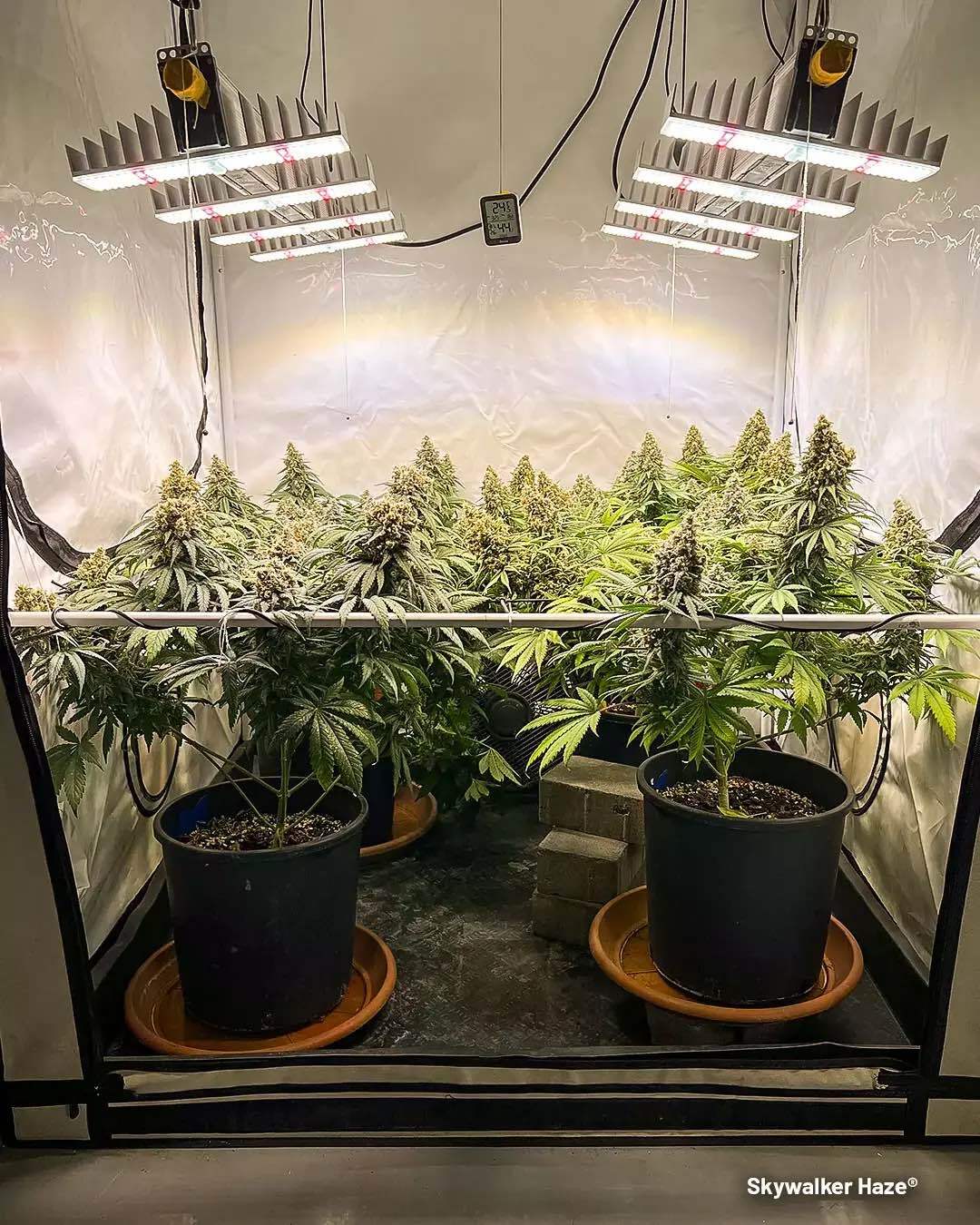
Winter presents unique challenges for indoor cannabis growers. Shorter days, colder ambient temperatures & dry air can stress plants and reduce yields/quality if not managed properly. However, with the right planning & grow-room preparation, you can maintain a thriving grow room all year-round. With experience supporting indoor home-growers since the 1980’s, Dutch Passion - the original inventors of feminised seeds, have these top-10 tips for your indoor grow during the colder months.
Keep the perfect winter grow room temperature and humidity

Maintaining stable environmental conditions can be more difficult in winter, especially in a colder house, apartment or basement. Cannabis growing in a loft during a cold winter can be impossible without serious insulation and planning.
When growing cannabis seeds of any type:
- Aim for temperatures around 20-26°C (68-78°F) with lights on, and a couple of degrees cooler with lights off.
- A minimum/maximum grow room thermometer can be useful to monitor temperatures, with particular attention being given to minimum temperature during winter grows.
- Problematic high-humidity issues (cannabis bud rot etc) are often less of an issue during winter with often cold dry air. Dry air can sometimes cause plants to lose moisture (transpire) too quickly. This is because vapour pressure deficit (VPD) increases in dry air - humidifiers can be used if required. See article below for a deeper VPD dive.
- If dry (low RH) ambient air is an issue you may wish to keep an eye on soil moisture levels too. A tensiometer is a device that measure soil moisture levels (via soil water tension readings). Tensiometers are expensive (around $/€/£ 50), but many top growers often have a tensiometer in each grow container to ensure they avoid over/under watering, one of the more common cultivation errors. If a tensiometer is too expensive then weighing your grow containers offers a rough guide.
- Use digital hygrometers and thermometers for precise monitoring. In cold climates, insulate your grow tent, floor etc to minimise heat loss. A dehumidifier helps combat excess moisture from plant respiration in a crowded tent, while a humidifier counters dry winter air.
- Consistent sweet-spot conditions prevent stress and promote vigorous growth. Think of ‘sweet spot’ conditions as including optimised nutrient, light levels, temperature, humidity etc all the way from marijuana seed to harvest.
For those that want a deeper dive into the reasons why vapour pressure deficit (VPD) rises in cold dry air, and how this can ‘dry out’ your plants faster check out our article.
Related: Everything you need to know about vapour pressure deficit for cannabis
Use smart supplemental heating to protect your cannabis plants

Outdoor cold can seep into your grow space, dropping temperatures below optimal levels. Supplemental heating ensures stability. Electric ceramic heaters with thermostats are popular with many growers—they distribute heat evenly and shut off automatically.
Home growers may be best advised to leave propane or gas grow room heaters to the professionals due to inherent fire risks and moisture buildup.
Note that some growers find the presence of an automatic fire extinguisher a reassuring temperature-activated gadget for their grow room. These offer peace of mind for the grower concerned about safety while they are away from the grow.
Beware of cold grow room floors in winter!
Placing your grow containers directly on a cold surface e.g. basement concrete floors can prevent your cannabis root systems from fully developing. You may wish to lift your grow containers off the floor using e.g. a plastic stand. Position grow room heaters so that they are not directed straight at the plants - to prevent any potential damage from hot spots.
Heat mats positioned under plant pots warm the roots directly and are popular with many winter growers in cold tents/basements. One potential risk from heat mats is that they can overheat lower roots if not thermostatically controlled. Use with a root-zone probe (set to 22–24°C / 72-75F).
Supplemental HPS light could boost heat & light in winter
Few die-hard HPS fans remain, with most growers preferring the superior light spectrum of fine-tuned LED grow lights. But if your indoor room/tent is a little cooler than you would like a small HPS light could boost temperatures as well as light levels. The alternative, especially if your light levels are already maxed out with LED, is to use a grow room heater.
Boost growth with optimised indoor grow lighting

Winter's reduced natural light means your grow room may be the brightest and lightest place in the house! Many growers take the opportunity to use the winter months to plan ahead and perhaps invest in some richly deserved grow room upgrades.
A quality LED grow light is a must-have for any indoor grower. Under-canopy grow lights are also becoming popular and getting great reviews. As are supplemental UVA/UVB light fixtures which boost terpenes as well as cannnabinoids.
Remember, money wisely spent on a good grow room upgrade is never regretted by the passionate grower.
Improve yields through proper air circulation and ventilation

Stagnant air invites pests and diseases. Combine cool air with some humidity and you have ideal breeding grounds for the fungi spores that lead to root rot and bud rot. Good airflow strengthens stems, evens out temperature/humidity and eliminates under-canopy corners where stale air can accumulate.
Install oscillating fans above and below the canopy to circulate air. This promotes thicker stems & branches. But avoid aiming your fans directly at close-range plants. Excess wind can damage or ‘whip’ the leaves.
- Use an exhaust system with carbon filters to expel the old air. Intake fans, if used at all in a small indoor grow tent, are often slightly lower powered than exhaust fans. This allows negative air pressure in the tent - preventing odours from escaping.
- Aim for 1-2 air exchanges per minute in your tent—this keeps leaves and plants in great condition. During winter, for obvious reasons, many growers do NOT draw in cold external air into their tent. Optimised grow room temperatures will probably be better delivered with ambient-temperature air taken from the house.
Fine-tune nutrient feeding for cold-weather cannabis growth

You may have done all you can but still struggle to get your grow room temperature as high as you would like. So it’s worth noting that colder roots absorb nutrients slower. This means the astute grower will fine-tune nutrient delivery to match reduced metabolism.
Many old-school growers prioritise on at least trying to keep the grow container (and therefore the root zone) warm even if the rest of the tent is cool.
- Use lukewarm nutrient solutions (around 20-22°C) to avoid shocking roots with heat/cold.
- Reduce nitrogen levels in flowering and monitor for signs of overfeeding, like tip burn. Flush with plain water if EC rises too high and you see the signs of over feeding.
- Organic options like BioTabs slow-release nutrients are well suited to a slower pace, cooler temperature grow.
Train and prune plants for maximum light and airflow

Some winter growers find it easier to keep a smaller tent/room warmer during the colder months. Such growers can maximise their harvest quantities and benefit significantly from techniques that optimise their smaller winter grow space.
Low-Stress Training (LST) bends branches horizontally for even canopy exposure, perhaps using ties or cord to firmly re-position branches in their new position. Cannabis topping or FIMing (removal of the growth tip at the top of your plant) creates bushier plants with more side blooms.
Scrog (Screen of Green) growing fills your grow space efficiently. It keeps the blooms in the optical sweet spot and increases yields significantly alongside improved air circulation. Improved air circulation reduces mould risk in dense winter canopies.
Don’t be afraid to get tough with your plants when it comes to training, defoliation etc. The best genetics really can handle it. Check out the following article for evidence - after 3 severe defoliations in a scrog this cannabis cup winning Dutch Passion autoflower seed variety gave a stunning 1.4kg/3lb dry yield. Proof that plants do respond well to a little stress.
Related: Severely defoliated Auto Critical Orange Punch gives record 1.4Kg / 3lb harvest
Prevent pests and mold in your winter cannabis grow room

Cold winter conditions can make a grow room, even if it's a few degrees below optimum, a very attractive option for bugs and critters. Prevention is key to a clean harvest.
- Quarantine new plants and use sticky traps for early pest detection.
- Neem oil or beneficial insects like ladybugs/ladybirds control pests organically.
- Keep humidity below 50% in flower and ensure good ventilation.
- Inspect daily for white powdery mildew—remove affected areas immediately. Some growers report that supplemental UVA/UVB lights have the bonus side-effect of reducing pest numbers.
Maintain ideal pH and EC levels for healthy root development

Nutrient availability relies on the correct pH and EC. Nutrient pH is a measure of acidity, whereas EC (electrical conductivity) is a measure of mineral concentration in the feed solution. Correct pH and EC are important to achieve, especially if there are concerns over ambient temperatures during winter grows. Remember that even if your nutrient feed solutions contain the necessary minerals, they will not be bio-available if the pH is in the wrong range or temperature too low. This is known as ‘nutrient lockout’.
- Target pH 5.8-6.5 for hydro/soilless,
- Target pH 6.0-7.0 for soil.
- Use a reliable pH meter, calibrate it regularly and adjust pH of your nutrient feeds with up/down solutions if required
- Monitor plants and dilute the nutrients if your plants show signs of burn.
- Regular testing prevents problems, lockouts or issues ensuring strong plants that can battle through winter stresses.
Stabilise water quality and temperature during winter grows

Tap water temperatures drop quickly in winter and stay low well into Spring. Applying nutrient solutions made with fresh cold water shocks the roots and slows growth.
Many indoor growers have stunted their plants and reduced harvest quality/quantity by making plant feed solutions up with ice cold tap water. Even with if your grow room is well optimised in all other respects, cold nutrient solutions will impair your grow, slowing growth and leaving you with small plants.
- Many growers allow their water to sit for 24 hours before using it. This allows any trace chlorine residues (from the water treatment addition of chloramine) to dissipate and also allows the water to reach room temp 20-24°C / 68-75F.
- If necessary, add a splash of hot water to increase the temperature. Use reverse osmosis to improve purity if local tap water is hard or poor quality.
- Calcium/Magnesium supplements may be required to counter deficiencies in soft water.
Cut energy costs with efficient winter grow room management

Most growers have switched to LED grow lights. Without doubt these offer better results than aging HPS technology. But modern LED lights are now so efficient that they emit far less heat than an HPS, which could be an issue in borderline cold weather.
Because of the lack of a heating-effect from LED grow lights it may be necessary to insulate walls/floors and seal leaks/drafts. Many growers will also invest in a quality grow room heater which can turn on when temperatures reach a certain level e.g. around 17ºC/62F during lights-off or 20ºC/68F during lights-on.
- Shorter grow cycles are much easier. Autoflower seeds like Auto Blueberry and Auto Blackberry Kush are high yielders with strong THC levels and can be ready in as little as 8-9 weeks after germinating the autoflower seed.
- Having your lights-on period during the coldest times in your house (often overnight, when most people are sleeping) can result in more stable grow room temperatures.
- Running exhaust only as needed via controllers can reduce heat loss through the extraction system. Though this does add more cost/sophistication to your environmental management system.
- Drawing fresh grow room air indoors from the house, rather than from outside, is an easy way to prevent grow room temperatures from dropping too much.
- For those that can afford them, a domestic house battery allows you to store & use cheap-rate overnight (or solar generated) electricity. Combined with solar panels, a grower can use a domestic storage battery to minimise use of peak-rate (day-time) grid electricity.
Bonus tip: A fast grow can be easier to control
Most growers find ways around any grow room temperature issues that winter can deliver. Sometimes a solution requires some new grow room tech, but that should pay for itself on the first harvest.
But if you routinely struggle to hold all the elements of an indoor grow together over the winter then a shorter grow may be the answer.
Growing autoflower seeds indoors allows you the fastest possible grow. Many grow them under 20 hours of daily indoor light, but they can be grown under 24 hours of light if that helps you maintain grow tent temperatures. Note that autos grown under 24-hour light may need a slightly lower light intensity than you would use for an 18/6 or 20/4 cannabis light cycle.
Good luck in your next indoor winter grow!
Related: Top 5 easiest autoflower seeds to grow indoors
Legal disclaimer: Cannabis cultivation must comply with local laws and regulations. Always ensure you are licensed or permitted to grow cannabis in your jurisdiction before applying any of the following practices. This guide is for informational and educational purposes only. Check out our cannabis seed sale for the latest special offers.